
It’s terrorism, stupid: the hot spot of the transition in Venezuela
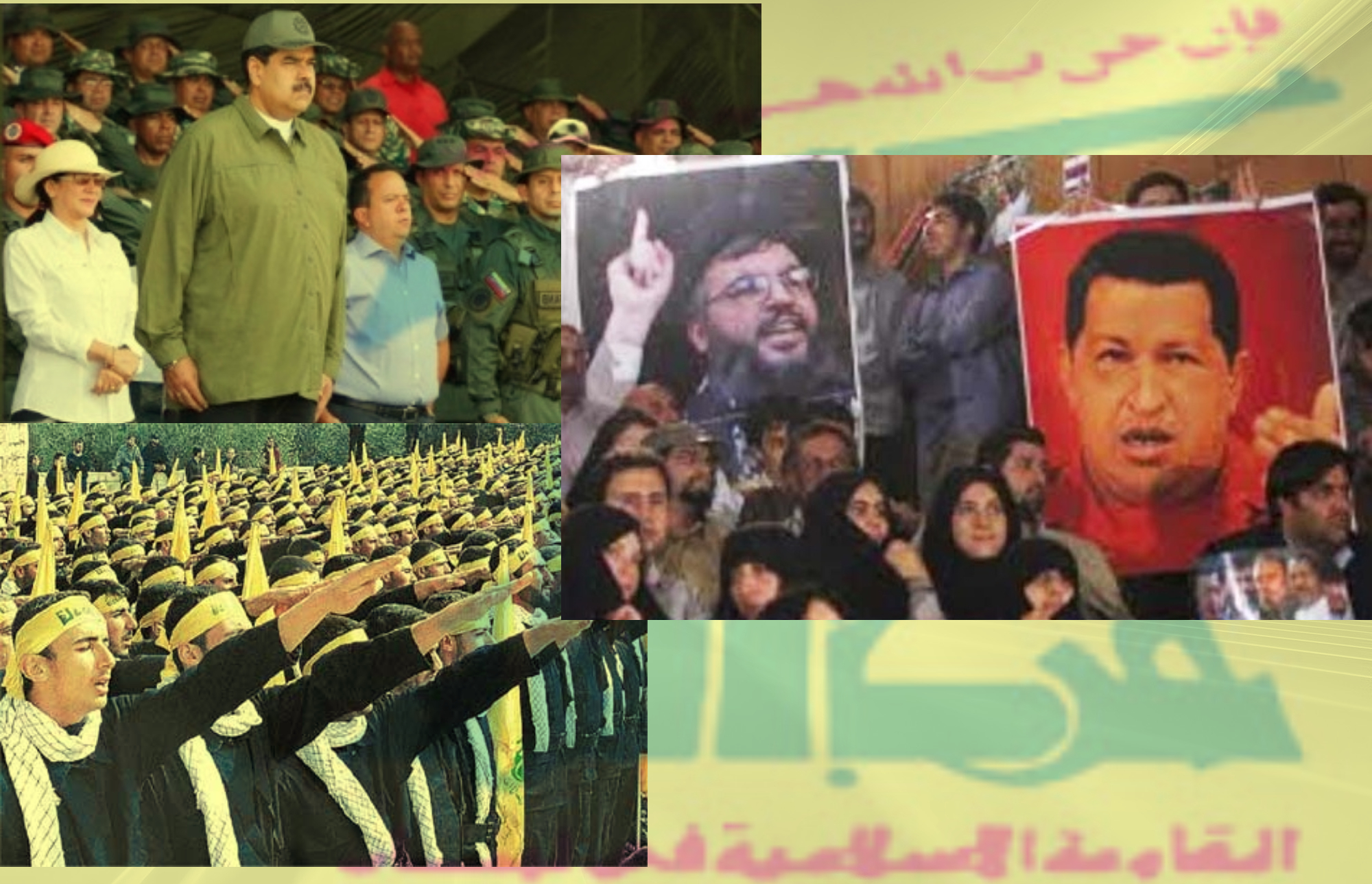
The paraphrase that recalls the famous phrase of James Carville, adviser to Bill Clinton during his election campaign, refers to one of the main concerns of the United States and its allies, but also of the countries of the region. It is about the powerful presence of the terrorist organization Hezbollah in Venezuela, and that from there it has expanded its criminal operations and influence towards the rest of the continent and the world. The elimination of this and other terrorist and organized crime structures in the country is, perhaps, one of the hottest points to resolve in light of a political transition in Venezuela.
Por: Fiorella Perfetto

The US Secretary of State, Mike Pompeo, spoke: “Hezbollah has active cells in Venezuela (…) People do not recognize that Hezbollah has active cells, the Iranians are affecting the people of Venezuela and of all of South America.”
The blunt affirmations of the administration official Trump, directly impacted on the waterline of the regime of Nicolás Maduro, who like the late President Hugo Chávez, came out in defense of what he considers is only “a political party”, as well than the Revolutionary Armed Forces of Colombia (FARC).
Maduro responds to the Secretary of State of the United States, Mike Pompeo on February 8 last. Courtesy
However, dozens of denunciations have jumped to the public opinion, with greater emphasis in the last decade and from the reception that the deceased president Hugo Chávez gave to the then Iranian president Mahmud Ahmadinejad in the country. Since taking office in 2005, the Iranian leader, led by Chávez, has consolidated a network of relationships – and influences – in Latin America.
The relationship between the terrorist organization Hezbollah and Iran is clear. Even though this group has a political presence in Lebanon, it has an armed wing that has grown alarmingly in recent years and its religious foundations reside in Iran. For example, the General Meir Center for Intelligence and Terrorism collects an appointment issued in 2012:
“Sheikh Naim Qassem, Sub-Secretary General of Hezbollah, had already expressed in the past that the leader Khamenei (supreme leader of Iran) is the source of religious authority of Hezbollah, and that the organization is under the authority of the Iranian leadership on strategic issues including the war against Israel. “
Then, with Venezuela and Cuba as fundamental supports, Tehran strengthened ties with other countries in the region whose governments were captured by the “socialism of the 21st century”, through, for example, organizations such as the Bolivarian Alliance for the Peoples of Our America (Sunrise) . Thus, Bolivia and Nicaragua also tipped the balance in favor of Iranian foreign policy focused mainly on the uranium enrichment program, a vital element for the development of nuclear weapons. Then there would be more meetings and agreements for the reopening of embassies in Chile, Colombia, Ecuador, Nicaragua and Uruguay as well as the establishment of relations and a new diplomatic headquarters in Bolivia.
Everything has been win – win for the Iranian nation in its incursion through the neighborhoods of the Latin American region. In addition to having Venezuela as a new ally in the world scenarios, it serves as a supplier of the raw material for the development of nuclear weapons, being this country rich in mineral resources such as uranium. But in addition, it has allowed groups such as Hezbollah to settle in the territory to carry out less conventional operations and, of course, conveniently close to its main enemy, the United States.
From Venezuela, Hezbollah also established solid relations with the main drug trafficking networks in the region, from the Envigado Office in Colombia to, according to US federal investigations, senior officials of the Chavez regime.
While Venezuela’s citizens are dying as a result of the greatest humanitarian and economic crisis in its history and the attention of the nations of the world focuses on joining efforts to refloat the country, these cells of different organized criminal structures have grown – and expanded – throughout the national territory. And as has been said, there have been few documented cases that demonstrate his presence in Venezuela.
The weight of terror and crime on the backs of Latin America
This organization, which had its origins in the eighties during the civil war in Lebanon, is composed of radical groups whose primary motivation was to eliminate the Israeli presence of that territory and establish an Islamic state similar to Iran. However, dozens of suicide attacks are counted, some of them in India, Argentina, Bulgaria, Lebanon and the United Kingdom, so this group is now considered a global terrorist network that has extended its alliances to other irregular groups and to international drug trafficking

The attack on the Asociación Mutual Israelita Argentina (Amia). Image: The Confidential
One of the main concerns of both Iran’s neighbors and the nations of the world is that during the last decade this group has become a “transnational organization of criminal terrorist resistance fueled by a gigantic, global and illicit financial apparatus and commercial, “which is why it has become an army with intelligence capabilities and great firepower.
According to estimates by the Israel Defense Forces (IDF), this armed group is made up of some 30,000 people and about half of them would be active elements within the organization. They also estimate “an arsenal of more than 100,000 long and short range missiles”. The question of rigor is, how much of this force will be in Venezuela and how to remove them from the country.
Venezuela looks today trapped in a conflict whose outcome is uncertain. What is known is that the alleged bilateral cooperation projects between Iran and Venezuela, many of these agreements entered into in 2007 in a massive way by the late President Hugo Chávez, only resulted in new plots of high-profile cases of corruption, money laundering and operations through which Venezuela helped the Arab nation to evade the sanctions imposed from the United States.
Read more: “Venezuela in the spotlight after becoming the figurehead of Iran“
Reports from international organizations document that Hezbollah is today one of the largest narcotics exporters from South America to Africa (central and western) and Europe, perhaps being the largest money laundering structure in the world, according to a report published in June. 2017 by the Center for Sanctions and Illicit Financing, belonging to the Committee of the US Senate for Foreign Affairs.
[scribd id=399741836 key=key-VEXKv0Y2yQB78Mf3ouuF mode=scroll]
This structure of organized crime ranges from the trafficking of cocaine, heroin, sale of counterfeit currency and cigarettes, to the massive laundering of money through the Lebanese banking system, which has become a much greater source of financing for this group than even the support of Iran. To make matters worse, the so-called “Hezbollah External Security Organization” (ie, its terrorist wing) uses crime to export its influence, increasing followers around the world and generating more income. And Venezuela is now inserted in an important way in a global financial and military structure of this terrorist group, whose scope is today significantly higher than in the past decade.
The Cartel of the Suns, thus without restrictions, in the move
The document issued by the US legislature, which is part of the counseling of the advisors to address the issue, cites some lines of action to reduce to a minimum the activities of the terrorist group that found in Venezuela many strategic advantages to expand its areas of influence, gain followers and more resources to operate. Further evidence of the presence and cooperation of the Chavez regime for these irregular groups.
Among the highlights of these lines of action, most implemented since 2008, mention is made of the use of criminal evidence to lift sanctions and establish criminal cases, the freezing of resources and assets belonging to the facilitators of financial and illegal operations. of the Hezbollah, the use of the articles of the Patriot Act (law enacted a month after the terrorist attacks on the twin towers that grants special powers to the State to fight terrorism), and thus act against exchange houses managed by capos drug traffickers and of course, to persecute these to reduce their radius of action and thus cut this important source of financing of terrorists.
The text can not be more clear: “Pursue drug traffickers: Operation Titan of the US Anti-Drug Department (DEA) (in the Envigado Office, a company belonging to Hezbollah), the Cassandra project (Hezbollah’s global cocaine trafficking network) under the Islamic Jihad) and Operation Perseus, directed at the Cartel of the Suns of Venezuela, “Los Turkos” and the Chávez regime associated with Hezbollah, Iran and the Syrian governments (Conviasa flights from Venezuela to Syria and Iran, and shipments of shipments to Europe).

The document also includes the criticisms that from the administration of Trump were raised against the government of Barack Obama and urges to take more energetic actions to achieve to end the influence of this criminal organization. “Frankly, it was (in reference to previous policies) a mixture of tragedy and parody combined with a seriously wrong turn of policy that resulted in no real strategic gain and in a serious miscarriage of justice,” which is why ” the Department of Justice must reconstruct, adequately fund and expand the capabilities and investigations against the so-called Iran Action Network, the terrorist and military wing of Hezbollah, its friends and partners in the leadership of the criminal governments of Venezuela and North Korea “.
To make matters worse, in January of last year, the Judicial Committee of the US Senate raised a petition to the then prosecutor Jeff Sessions and the director of the counternarcotics office (DEA), Richard Patterson, in which the congressmen showed their concern about the threat Certainly to the national security before what they described as the abandonment of the subject Hezbolláh during the Obama administration and requested documents and relevant information on the Operation Cassandra.
[scribd id=399742053 key=key-4L0E6jk36mOnA8uDImgF mode=scroll]
The first of the petitions says: “All documents and communications, including investigative reports, draft accusations, arrest warrants and trial memoranda, referred to or related to the Cassandra Project, the Iran-Hezbollah Super-Facilitators Initiative, Abdallah Safieddine, Ayman Saied Joumaa, Walid Makled, Hugo Carvajal, Ali Fayad, transnational crime group and the Lebanese Canadian bank “.

It is not casual, and less isolated events, the designation of sanctions by the Ofac
As it is known, the office of Control of Foreign Assets (Ofac), belonging to the US Department of the Treasury, keeps records of all those individuals or legal entities subject to sanctions for presuming their participation in illegal activities that threaten the national security of this country. or your financial system.
A timeline that includes the actions executed in this direction that began in February 2011 and that was exposed to the members of the Senate in 2017, shows that some of the designations of Venezuelans or companies linked to these are not isolated events but rather the otherwise, they would be part of the policies of the United States against the Hezbollah network.

Highlights an operation that takes place since February 1, 2016. At that time, the DEA and the European authorities discovered one of the largest narcotics distribution and money laundering networks controlled by Hezbollah whose structure touches at least seven countries. As a result, dozens of arrests have been made of Lebanese belonging to the so-called Business Affairs Component of the External Security Organization (BAC) of Hezbollah, the cell in charge of receiving such resources and acquiring weapons for its operations in Syria.
This ongoing investigation is global and involves numerous international organizations that have made new discoveries of links between drug trafficking and terrorism. This effort is aimed directly at Hezbollah members who have established commercial relationships with the South American drug cartels, such as “The Envigado Office”, responsible for supplying large quantities of cocaine to the drug markets of Europe and the United States.
As part of this operation, on February 13, 2017, the US Treasury Department announced the entry to the list of sanctions of the then vice president of Venezuela, Tareck El Aissami and his “frontman” or principal financial operator Samark López Bello, who were frozen bank accounts and at least 13 front companies with operations in the British Virgin Islands, Panama, Great Britain, the United States and Venezuela.
Read more: “Tareck El Aissami and Samark López, the dangerous alliance sanctioned by the United States“
The Hezbollah is here: some documented facts
Perhaps one could think that both the statements of Pompeo and the actions that the United States has taken to punish the alleged collaborators of the terrorist organization is only the abject version of Iran’s number one enemy. However, facts, that no opinions have been documented.
Since the European Union (EU) and the rest of the organizations that group the nations of the world included the armed wing of Hezbollah in its blacklist of terrorist organizations in July 2013 (different from the political arm of the Shiite Islamist movement that makes political life in Lebanon), the evidence on their criminal operations are not few.
This group operates with relative ease in the so-called South American triple border, that formed between Argentina, Paraguay and Brazil, where one of the largest Arab colonies of the continent resides.
The presence of Hezbollah in the region is not new, as its growth and ties with drug cartels and criminal organizations. It is enough to remember the attack perpetrated in 1994 by the terrorist organization at the headquarters of the Mutual Association Israelite Argentina (Amia) in Argentina, in which 85 people were killed and more than 300 suffered injuries. Tehran never cooperated with the investigations despite the fact that in 2006, Argentine prosecutors requested the capture of a dozen former Iranian officials who would be involved in the conspiracy.
It was the case that the Argentine prosecutor Alberto Nisman investigated for more than a decade. It would also be the case for which he would be murdered in January 2015. Four days before Nisman was found dead in his apartment in Puerto Madero, he had directly accused the then president Cristina Fernández de Kirchner – partner and personal friend of the late president Hugo Chávez – of course aggravated cover-up. Before, the president incurred in many investigations for corruption and money laundering during his administration and that of her husband, the late President Néstor Kirchner, had earlier signed a Memorandum of Understanding with Iran, which Nisman considered would become a veil for impunity.
Read more: “The revolutionary robbery of the 21st century and the K route: how Chávez and Kirchner stormed the public treasury“
Everything points to Puerto Iguazú, there in the triple border. As investigated by Nisman, the weapon that detonated in Amia came from Ciudad del Este where Assad Ahmad Barakat operates Hezbollah from his military and financial arm. And Nisman said, in exchange for a high price: “in the tripartite border area has verified the installation of various Islamic cultural and religious institutions closely linked to dependencies of the Iranian State abroad and that, moreover, have been outstandingly led by recognized members of the Hezbollah terrorist organization in the region. ”

But in Venezuela there are no such uncomfortable officials, on the contrary. An investigation published by the US network CNN in February of 2017 exposed how from the high government Chavista was made available to this terrorist group and many others, the possibility of getting a Venezuelan identification document that would allow the active elements of these cells to legally penetrate the borders of the nations of the world.
“A confidential 2013 regional intelligence report obtained by CNN, says that 173 individuals from the Middle East obtained passports and Venezuelan documents from 2008 to 2012. Among them, people linked to the terrorist group Hezbolláh. According to the report, the man who ordered the issuance of the passports is Tareck El Aissami, a Venezuelan politician who was named vice president of the republic in January of this year. The Aissami also served as Minister of Interior and Justice in charge of the country’s immigration system, as well as as governor, “the report said.
And it contributes more: “Another high-profile figure linked to terrorism is Ghazi Nasr Al-Din, a former Venezuelan diplomat who worked at the Venezuelan embassy in Syria. The FBI has been looking for him since January 2015 to question him about his fundraising efforts with Hezbollah partners. For its part, the US Treasury Department said in a 2008 statement that Nasr Al-Din used his position as a diplomat to facilitate travel to Hezbollah members from and to Venezuela. “
Other testimonies of former Chavez officials would be packaged in books that collect revealing data about secret agreements that also touch Nicolás Maduro. Rafael Isea, former finance minister of the government of Hugo Chávez, confirmed in his book “Bumerán Chávez, the frauds that led to the collapse of Venezuela” published in 2015, that the maximum leader of the terrorist group, Hassan Nasrallah and Nicolás Maduro, then minister of Foreign Affairs, met in Damascus to arrange the delivery of Venezuelan passports to members of Hezbollah, as well as activities related to the supply of weapons and drug trafficking.

A year earlier, in 2014, the Center for a Free and Secure Society (SFS, for its acronym in English), published a study that collects the findings that the intelligence agencies of Canada and the United States made regarding the use of Venezuelan identification documents by these terrorist groups to legally enter these countries.
At least 173 citizens of the Middle East were detected carrying Venezuelan identity documents between April 2008 and November 2012. These people – linked to the terrorist group Hezbolláh – sought to enter the United States. “It was during this wave that Suleiman Ghani Abdul Waked, known as Hassan’s right hand. Nasrallah, head of Hezbollah, received his Venezuelan papers, “says the report.
“More than 70% of these individuals have connections with the terrorist group,” said Joseph Humire, director of the SFS. Once again, former Vice President Tareck El Aissami and former Venezuelan diplomat Ghazi Nasr Al-Din are mentioned in the report, the latter as one of the main representatives of Hezbollah in Venezuela.
And oil could not be left out of the discussion. Through Venezuela’s state oil company PDVSA, funds and operations have been triangulated to help Iran export its oil, but the Chavez regime has also provided the same services to Syria, Iran’s allied government and in which Hezbollah fights in alliance to confront the rebel troops, even attacking the civilian population of this country.
“Ghazi Atef Nassereddine, a Hezbollah agent sanctioned by the United States, has allegedly been working to consolidate Venezuela’s ties with Syria, including helping to create plans to transfer Syrian oil to Venezuelan refineries to avoid sanctions imposed on President Bashar al-Assad, ” reveals the report.
The figure of Tareck El Aissami is relevant in the file. “In addition to having built an immense money laundering network and overseeing the Venezuelan identification system, he has provided documents to the Revolutionary Guards of Iran and other Islamist militants from the Middle East. In addition, El Aissami established a shipping network managed from the Venezuelan consulate in Jordan, through Husam Al Aissami, a close friend. ”

As if that were not enough, drug trafficking. In 2011, US authorities explained in detail how this Lebanese terrorist group lifted a complex financial network around drug trafficking. The network linked to a bank of that nation and to the cartel of the Zetas of Mexico. At that time prosecutors accused Aymann Joumaa, who had resided in Colombia, for smuggling tons of cocaine to the United States and laundering millions of dollars of money obtained from the sale of the drug in this country.
The Lebanese Canadian National Bank of Beirut, the eighth largest bank in Lebanon, was then designated as a “financial institution of primary interest in money laundering” linked to Hezbollah.
Read more: “The mega stew between Cubans and Germans with the passports that are woven in the Saime”
The risk of losing the country, the great legacy of Chavism
One of the most dangerous legacies of Chavismo in Venezuela has been its alliance with these terrorist groups that have invaded the country and under its control, nothing more and nothing less than the identification data banks of all Venezuelans and the power over them. same. But in addition, they are groups with fire and intelligence power over which nobody has control, much less the Venezuelan Armed Forces.
The Digger consulted an expert in the field of national security and terrorism on the situation in Venezuela and the presence of this terrorist group in its territory. “The serious risk that runs here is that Venezuela is sitting on a time bomb. There is a mixture of elements that makes it very difficult to define a solution. In Venezuela, the cells of these terrorists, the Colombian guerrillas, corrupt soldiers and everyone operating financially through drug trafficking, “he said. “It is an issue that transcends those borders, it is a problem that must be addressed by all the countries of the region,” he added.
The Foreign Policy magazine goes further. In a note published on February 9 this approach is made.
Given the current instability in Venezuela, it is fair to ask what would happen to Hezbollah under a government led by opposition leader Juan Guaidó, who was recently recognized as the legitimate ruler of the country by the United States and dozens of other nations, including the United States. European heavyweights. France, the United Kingdom, Germany and Spain.
A government led by Guaidó would surely be more active in opposing Hezbollah’s presence in Venezuelan territory, not only nominally but also in a more aggressive search to reduce the group’s criminal network and, by extension, Iran’s influence. As part of a quid pro quo for its support, Washington is likely to seek support in Guaidó to crack down on any activity linked to Iran throughout the region.
But there is a big difference between will and ability. And while a government led by Guaidó could initially demonstrate a strong political will to counter Hezbollah and Iran, at least to appease the Trump administration, Venezuela as a country faces an immense challenge in trying to rebuild its shattered society. Rejecting Hezbollah can simply fall much lower on the list of priorities for Guaidó and his administration than the United States would like.
At the end of January, the terrorist group issued a statement in which it expressed its support for Nicolás Maduro and condemned “the blatant intervention of the United States [in an attempt] to destabilize Venezuela, and strongly condemns the attempted coup against the legitimate authority of the country. ”